


Expert Advisory for Government Tax Administrations
3Rock provides specialist advisory services to government tax administrations and competent authorities. Our team includes a former Head of DITC Compliance, a former OECD Global Forum Secretariat assessor, and an APRG-nominated peer reviewer — practitioners who have worked at the centre of the frameworks they now advise on.
Why does 3Rock's experience matter?
Preparing for an OECD peer review requires more than understanding the standards. Success depends on understanding how assessments are conducted, how findings are reached, and what determines a rating.
3Rock combines direct experience in peer review assessment, regulatory implementation, competent authority operations, enforcement, and private sector compliance — across governments, tax administrations, international bodies, and Financial Institutions.
When governments engage 3Rock, they gain practical, experience-driven support from a team that understands the process from multiple perspectives — assessor, regulator, competent authority, and industry participant.
How does the OECD peer review process work?
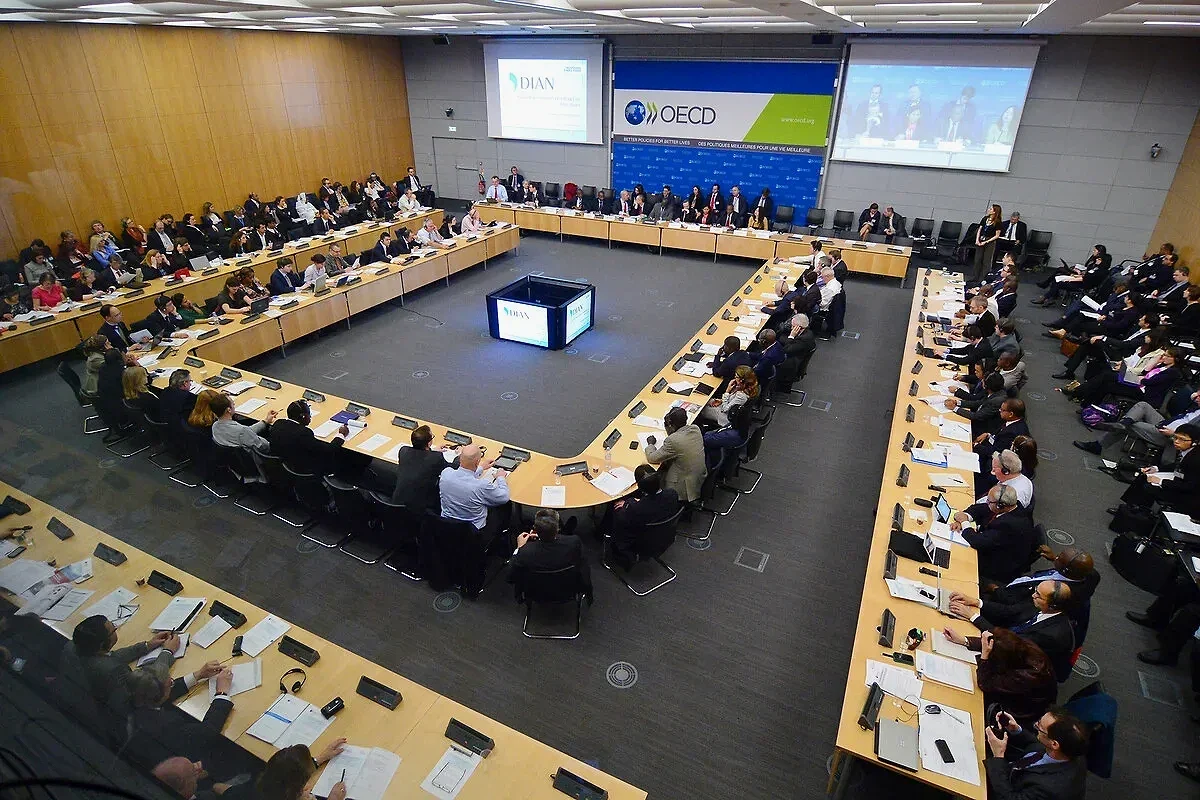
The OECD Global Forum conducts structured peer reviews to assess whether jurisdictions have effectively implemented international tax transparency standards — including CRS, EOIR, CARF, and the Substantial Activities requirements under the FHTP. Reviews are carried out through dedicated working groups: the AEOI Peer Review Group (APRG) for automatic exchange standards, and the Peer Review and Monitoring Group (PRMG) for exchange of information on request. Jurisdictions are assessed against a four-point ratings scale — Compliant, Largely Compliant, Partially Compliant, and Non-Compliant — with published ratings that carry real consequences, including potential listing as a non-cooperative jurisdiction by the European Union.
For a detailed overview of the review process, working groups, ratings framework, and common implementation pitfalls, see our Insights post below.

Why does a peer review rating matter?
A rating below Largely Compliant in an AEOI or EOIR peer review is not an administrative finding — it carries material consequences for your jurisdiction and its financial sector:
Reputational risk and heightened scrutiny: Risk of being added to the list of non-cooperative jurisdiction by the European Union, leading to increased monitoring, follow-up reviews, and adverse assessments by international bodies.
Increased restrictions by partner jurisdictions: Peer jurisdictions may impose stricter compliance requirements or enhanced due diligence on transactions.
Financial sector de-risking: Global banks may limit or review relationships with Financial Institutions, affecting cross-border connectivity.
Higher remediation burden: Additional effort and resources required to address identified gaps and strengthen systems.
What are some common implementation challenges — and how does 3Rock help addresses them?
Deficiencies identified in one review process frequently intersect with another. A gap in your legal framework affects AEOI, EOIR, FHTP, and CARF assessments simultaneously. 3Rock's cross-framework advisory approach ensures these issues are addressed in a coordinated manner — not in isolation.
Legal framework and governance gaps
Significant or fundamental gaps in the legal framework directly affect a jurisdiction's peer review rating across multiple processes and cannot be offset by strong operational performance.
3Rock supports jurisdictions in identifying and addressing legislative gaps, ensuring the legal framework meets the requirements of each relevant standard before an assessment team arrives.
Operational resource constraints
Human and IT resources must be adequate and appropriate for the jurisdiction's financial sector and demonstrably defensible under assessment team scrutiny.
3Rock works with competent authorities to assess resource adequacy, strengthen operational frameworks, and document the rationale for the approach taken — in a form that withstands peer review.
Lack of compliance verification and enforcement activities
Effective implementation requires documented, regular compliance verification activities and a credible penalty regime that produces a genuine deterrent effect.
3Rock assists jurisdictions in designing and documenting compliance verification programmes — thematic and comprehensive — and in establishing enforcement frameworks that satisfy the evidentiary requirements of the AEOI and EOIR review processes.
Poor documentation of operational strategies
Assessment teams expect risk assessments, compliance strategies, and internal policies to be documented, current, and accessible. Fragmented or outdated material is a recurring finding across reviews.
3Rock reviews, updates, and strengthens operational documentation — ensuring the material available to an assessment team accurately reflects the jurisdiction's actual compliance framework.

AEOI Effectiveness Review
The peer review of the AEOI Standard is currently ongoing. 3Rock supports jurisdictions by ensuring the risk assessment process, compliance strategy, identification of the FI population, compliance verification and enforcement activities, and the data quality transmitted to exchange partners, in the context of that jurisdiction. Where a jurisdiction has been issued a weak rating (below Largely Compliant), 3Rock also provides assistance with the re-assessment process once implementation has improved.
FHTP Peer Review
The Forum on Harmful Tax Practices assess the implementation of Substantial Activities requirements (i.e. Economic Substance) across all no or only nominal tax jurisdictions. Particular emphasis is being placed on verification activities, including onsite audits, of holding companies, classification issues surrounding Entities that claim to be out of scope of the requirements, and enforcement actions for identified non-compliance.
EOIR Peer Review
The EOIR process is the longest standing review process overseen by the OECD Global Forum. Currently in the third round of reviews, the Peer Review and Monitoring Group (PRMG) continues to assess deficiencies in legal frameworks, timeliness of responses to requesting jurisdictions, along with a number of other horizontal issues in the enhanced monitoring progress. If your jurisdiction needs assistance addressing gaps in beneficial ownership or accounting records, or have a backlog of requests — 3Rock can help.
CARF Legislative Assessment
Effectiveness reviews for the CARF have not yet started, but will likely mirror the review carried out of the CRS with a review of legislative assessments. At the early stages, however, jurisdictions are expected to have their exchange mechanisms in place, a legal framework that supports the collection and exchange of information, and have the necessary confidentiality and data safeguards in place to begin exchanging information in 2027.

Connect with 3Rock
Reach out to 3Rock, and we can discuss the ways we can support your jurisdiction’s implementation efforts and strengthen OECD peer review ratings.
Contact us either directly by email: info@3rock.ky, or by submitting a Government Advisory Enquiry via the link below.